

Winter is here, and if your garage feels more like a freezer than a workspace, it’s time to winterize your garage door. A poorly insulated garage can leak heat, increase your energy bill, and make it uncomfortable to step inside.
The good news? Learning how to insulate a garage door doesn’t require professional help or a huge budget. Whether you want to insulate the bottom of a garage door, use garage door insulation kits, or try DIY-friendly methods, there’s a solution for every homeowner.
In this guide, we’ll show you 5 effective ways to insulate garage doors for winter including R-value considerations and material comparisons. And yes, we have added some expert tips for you at the end of this blog.
So, let’s dig in.
Key Takeaways
- Properly winterizing your garage door keeps your garage more comfortable, lowers heating costs, and prevents drafts from entering your home.
- Options like rigid foam boards, reflective insulation, DIY garage door insulation kits, spray foam, or fiberglass batts give you flexibility depending on your budget and climate.
- Upstate Doors provides the products, knowledge, and professional services you need to properly winterize or replace your garage door for reliable performance all winter long.
Why R-Value Matters in Garage Door Insulation
Before you grab materials, let’s talk R-value.
The R-value measures how well insulation resists heat flow. The higher the number, the better it keeps heat in during winter and out during summer.
- Cold regions with snow → R-10 or higher recommended.
- Mild climates → R-6 to R-9 is usually sufficient.
Always check the R-value before buying, especially if you’re shopping for the best garage door insulation for cold weather.
5 Proven Methods for How To Insulate Garage Doors For Winter
Well, after a long query of research, analysis, and consideration, we’ve come up with 5 methods that are effective and suitable for both residential and commercial garage door insulation. Here they are:
1. Insulating Garage Door Using Rigid Foam Insulation
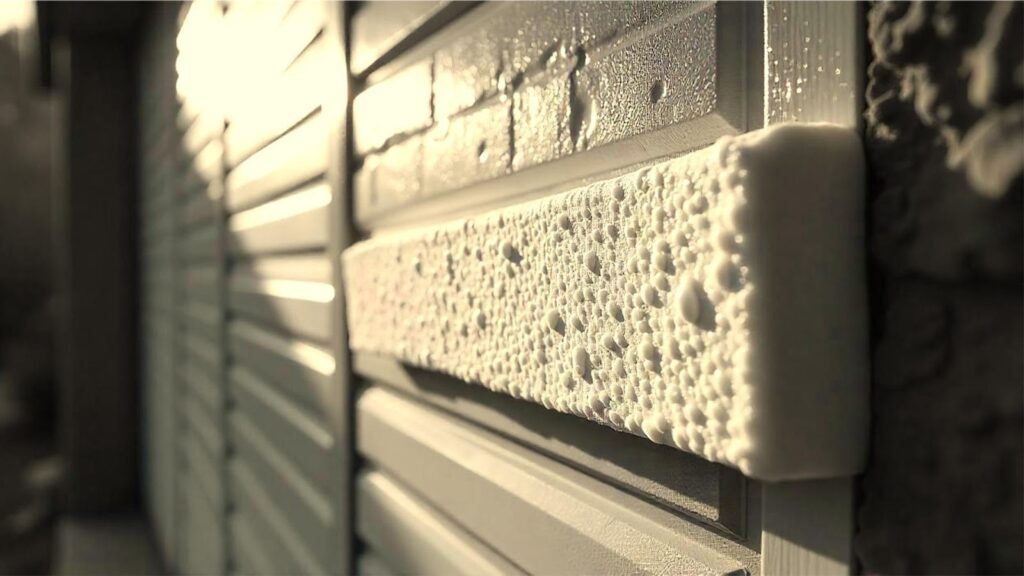
Rigid foam boards are a popular choice for garage door insulation. They are lightweight, durable, and deliver strong insulation performance.
A study by the U.S. Department of Energy shows rigid foam insulation to be one of the most effective and energy-efficient materials.
Key Consideration:
- Lightweight
- Durable
- Easy to install
- R-value of 5.6 to 8.0 per inch of thickness
- Perfect for flat-panel doors
Materials Needed:
- Rigid foam boards (polystyrene or polyurethane with R-values of 4-6 per inch).
- Measuring tape.
- Utility knife.
- Adhesive or double-sided tape.
Steps to Install:
- Measure the dimensions of your garage door panels. Make sure to measure every panel, as not all the panels might be the same size.
- Cut the rigid foam boards according to the panel size so that they fit snugly into the panels.
- Attach double-sided tape or other adhesive to different points of the door panel.
- Now, attach the boards, pressing firmly over the area where the tap or adhesive is.
2. Garage Door Insulation with Double Reflective Insulation
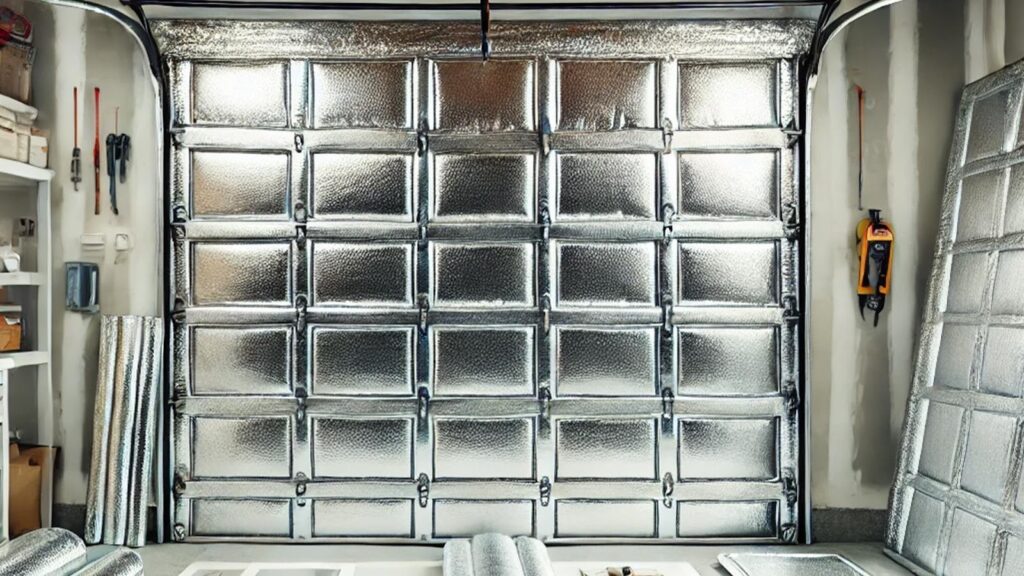
Double reflective insulation, such as Reflectix, is an affordable and versatile solution. Mostly, this consists of two layers of polyethylene air bubbles sandwiched between reflective aluminum polyester film.
Research from Oak Ridge National Laboratory confirms that reflective insulation works by reflecting radiant heat, which makes it ideal for both winter and summer use.
Key Consideration:
- Quick & easy to install
- Highly efficient in preventing heat loss
- R-value of around 3.7 to 6
- Ideal for sectional and metal doors
Materials Needed:
- Reflectix double reflective insulation.
- Scissors or utility knife.
- Adhesive or double-sided tape.
Steps to Install:
- Measure and cut the reflective insulation to match the size of your garage door panels.
- Attach it using adhesive or double-sided tape facing the silver side outward.
- Ensure there are no air gaps between the speculation and the door panels.
3. Using Garage Door Insulation Kit
For a hassle-free solution, insulate garage doors with pre-made kits. These include pre-cut panels, fasteners, and instructions, making DIY installation simple.
Again, when we went through the Consumer Reports, we found that most people prefer DIY garage door insulation kits for hassle-free and quick installation.
Key Consideration:
- Quick & easy installation
- Noise-damping properties
- R-value of around 8 to 10 based on materials
- Best for workshop, storage, or residential garage doors
Popular Insulation Kits:
- Owens Corning Garage Door Insulation Kit.
- Home Depot Garage Door Insulation options like Cellofoam
Steps to Install:
- Just follow the instructions provided in the kit.
- Secure the panels to the door using the fasteners provided with the kit.
4. DIY Garage Door Insulation with Spray Foam
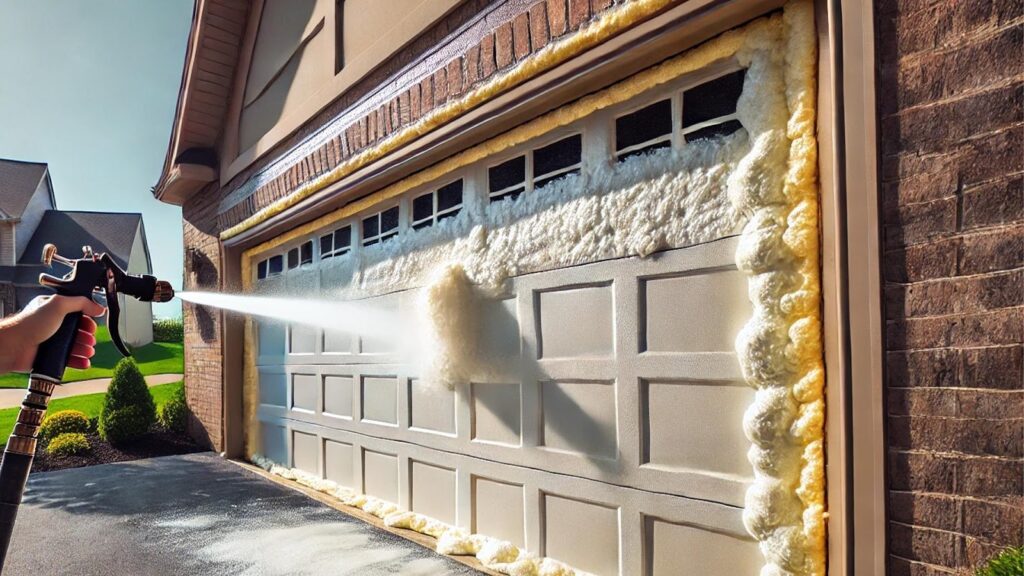
Spray foam insulation is best for sealing gaps, cracks, and uneven surfaces on your garage door. It gives your garage a tight seal along with stronger thermal resistance.
According to the National Renewable Energy Laboratory, spray foam is efficient in creating a continuous barrier that significantly reduces air leakage.
Key Consideration:
- Long Lasting
- Superior thermal resistance
- Energy efficient
- R-value of around 6 to 7 for closed cell and 3.5 to 3.6 per inch for open cell spray foam
- Best for different sizes and shapes of garage doors
Materials Needed:
- Spray foam insulation (low-expanding foam recommended)
- Protective gear (gloves, goggles, and a mask)
Steps to Install:
- Clean and dry the garage door surface. (It’s a must for spray foam insulation.)
- Apply low-expanding spray foam in layers, focusing on seams and gaps.
- Let the foam cure and dry out.
- Finally, trim any excess foam from the door.
5. Fiberglass Batt Insulation
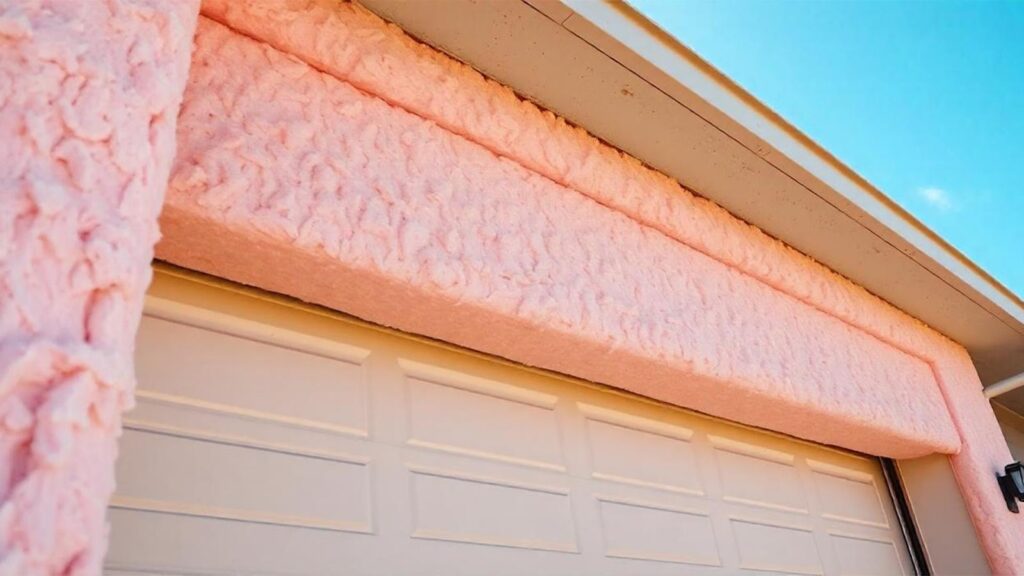
Fiberglass batts are a traditional yet highly effective insulation option. The North American Insulation Manufacturers Association recommends garage door insulation with fiberglass, as it can lead to energy savings of up to 20% on heating and cooling costs. Fiberglass batts are versatile and can be cut to any size or shape of the garage door.
Key Consideration:
- Traditional method
- Best for extremely cold regions
- Both energy- and cost-efficient
- R-value of around 11 or higher based on the fiberglass density
- Best for panel-style garage doors
Materials Needed:
- Fiberglass batt insulation
- Measuring tape
- Utility knife
- Adhesive or brackets
- Protective gear (gloves, goggles, and a mask)
Steps to Install:
- Cut the fiberglass batts to fit the size of each door panel. Make sure to measure every panel, as not all the panels might be the same size.
- Attach the batts using adhesive or brackets.
- Cover the batts with a vapor barrier if necessary.
Note:
- Wear protective gear to avoid skin irritation.
- Ensure the batts are tightly sealed to prevent sagging.
Expert Tips for Garage Door Insulation
- Seal Small Gaps First: Before adding any insulation, inspect your garage door for tiny cracks or openings. Use caulk or weatherstripping tape to close them off. This prevents heat from escaping and makes your garage door winter insulation more effective.
- Add Weatherstripping Along Edges: Cold air often seeps in through the sides and bottom. Install fresh weatherstripping to keep out drafts and moisture. If you need to insulate the bottom of the garage door specifically, a heavy-duty rubber seal is a must.
- Pick the Right Insulation for Your Climate: If you live in a freezing climate, fiberglass or rigid foam boards provide the best garage door insulation for cold weather. In milder zones, reflective insulation is lightweight and efficient.
- Don’t Forget the Garage Door Threshold: Installing a threshold seal at the floor line helps keep out snow, water, and cold air. This small upgrade is one of the simplest ways to winterize garage door systems and extend the life of your insulation.
- Balance Energy and Budget with Insulation Kits: If you want quick results without complex DIY, try insulating garage door kits. These kits come with pre-cut panels and fasteners that give you a straightforward option for how to winterize garage door spaces without overspending.
When to Call a Professional for Garage Winterization
Sometimes winterizing your garage door goes beyond a quick DIY fix. While adding weatherstripping or installing a basic insulation kit can help, there are cases where professional service is the smarter choice.
Signs You May Need Expert Help
- Warped or damaged garage door panels that affect insulation.
- An old or malfunctioning opener that struggles in cold weather.
- Insulation that won’t stay in place or doesn’t provide proper coverage.
- Persistent drafts or gaps even after sealing and caulking.
- Broken seals or rusted tracks make it difficult to insulate the bottom of a garage door effectively.
A professional can evaluate whether a new seal, upgraded garage door insulation, or even a replacement door is the best solution. In some cases, a full upgrade may offer the best garage door insulation for cold weather rather than patching up old materials.
At Upstate Doors, we provide complete winterization services from sealing gaps to installing the right insulation system. Our experts know how to insulate doors for winter and can recommend whether reflective, foam board, or fiberglass solutions work best for your space.
Don’t let cold drafts and high energy bills creep in. Contact Upstate Doors today and let our technicians show you how to winterize a garage door the right way.
Wrap-Up
We have reached the end of this guide now. And hopefully, you have got enough ideas on how to insulate garage doors for winter, right?
Whether you use rigid foam, spray foam, or a garage door insulation kit, knowing the R-value and choosing the right method are key to success in this.
However, I personally don’t prefer the spray foam method, as it seems to me to be time-consuming. I like the fiberglass batt, though a bit costlier but completely sealed. For a budget deal, contact Upstate Doors to get the best deal for your garage doors.
Now, let us know in the comment section which method you find suitable according to your region and garage door.
FAQs:
1. How to insulate a garage door from the cold?
To insulate a garage door from cold, consider your climate and choose the best insulation method considering the R-value. Then follow any method from the 5 methods mentioned in this blog and make your garage door insulated for this winter.
2. What is the best insulator for a garage door?
The best insulator depends on your climate and garage door type. However, fiberglass batts are considered the best insulators for their high thermal resistance. For an affordable option, you can opt for rigid foam boards.
3. What is the cheapest way to insulate a garage?
Reflective insulation or DIY solutions like foam boards are the cheapest way to insulate garage doors. You can also purchase an affordable garage door insulation kit from stores like Home Depot or Walmart.
