
Have you ever wondered what actually keeps your garage door moving smoothly every time you open or close it? The answer comes down to one small but powerful component, the springs.
So which one is better? It really depends on your situation. Torsion springs are a great fit for heavier and wider garage doors because they last longer and handle more weight with ease. Extension springs work well for smaller, lighter doors and are a common choice in garages with limited overhead space.
In this article, you will learn the key differences between a torsion spring and an extension spring garage door setup, and how knowing the right one for your door can save you from unnecessary repairs.
The Two Types of Garage Door Springs (Quick Overview)
When it comes to garage doors, springs do all the heavy work. They balance the door’s weight and make it easy to open and close, whether you’re doing it manually or with an opener.
There are two main types you’ll come across: torsion springs and extension springs. Here is a quick side-by-side look at how they compare.
| Feature | Torsion Spring | Extension Spring |
| Location | Mounted above the door | Runs along the side tracks |
| How It Works | Twists to store and release energy | Stretches and contracts to move the door |
| Best For | Heavy and wide garage doors | Smaller and lighter garage doors |
| Lifespan | Longer, up to 15,000 to 20,000 cycles | Shorter, around 10,000 cycles |
| Cost | Slightly higher upfront cost | More affordable and budget-friendly |
Both types get the job done, but as you can see, they are built for different situations. Keep reading to find out which one is the right fit for your garage door.
How Torsion Springs Work and Where They Sit
If you have ever looked above your garage door and noticed a thick metal coil running along a metal bar, that is a torsion spring. It sits horizontally across the top of the door opening, mounted on a steel shaft right above the door.
Most standard garage doors have one torsion spring, while heavier or wider doors often use two for extra support.
So how does it actually work?
When you close your garage door, the spring twists and winds up tightly, storing mechanical energy inside the coil. The moment you open the door, that stored energy releases and unwinds, which rotates the drums and lifts the door smoothly.
How Extension Springs Work and Where They Sit
When people talk about garage door spring types, extension springs are usually the ones found in older homes and smaller garages.
Unlike torsion springs, these are not mounted above the door. Instead, they run horizontally along both sides of the door, sitting above the horizontal tracks on the left and right.
So how do they work? Extension springs operate on a simple stretch and release system. When the door closes, the springs stretch out and store energy.
When you open the door, the stretched springs snap back, and that force pulls the door up.
One thing worth knowing in the torsion spring vs extension spring conversation is that extension springs carry more risk when they break.
Key Differences: Safety, Lifespan, and Cost
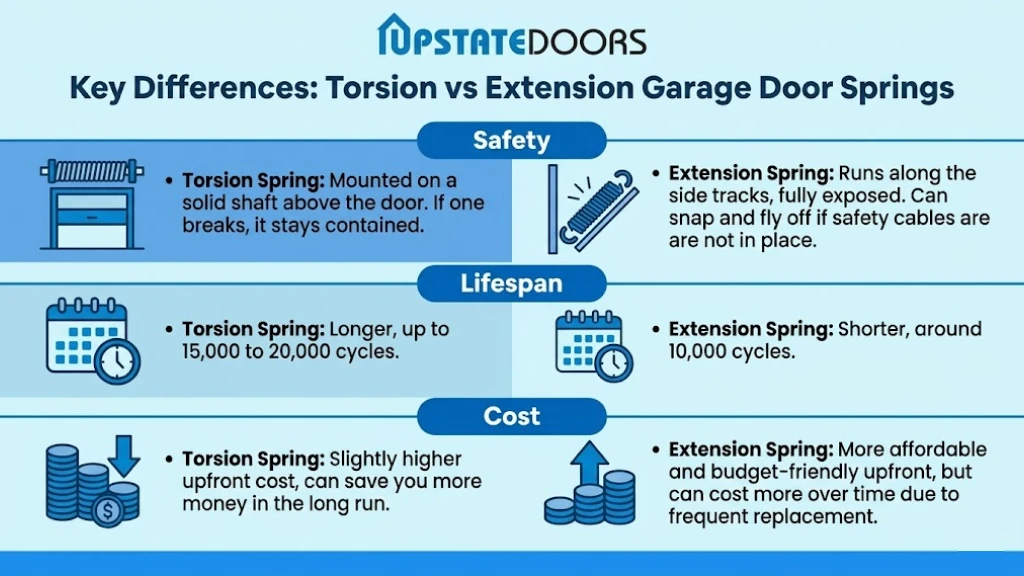
When it comes to choosing between garage door spring types, three things matter the most to homeowners: safety, how long they last, and what they cost. Here is an honest breakdown of how torsion spring vs extension spring compare across all three.
Safety
Safety is probably the biggest difference between the two. Torsion springs sit on a solid shaft above the door, so if one breaks, it stays contained. Extension springs are fully exposed on both sides and can snap and fly off if safety cables are not in place.
| Safety Factor | Torsion Spring | Extension Spring |
| Mounting Position | Above the door on a solid shaft | Along the sides, fully exposed |
| When It Breaks | Stays in place, with contained damage | Can snap and fly off |
| Safety Cables Needed | No | Yes, highly recommended |
| Overall Safety Rating | Higher | Lower without safety cables |
Lifespan
Torsion springs simply last longer. If you use your garage door multiple times a day, this difference really adds up over time.
| Lifespan Factor | Torsion Spring | Extension Spring |
| Total Cycles | 15,000 to 20,000 cycles | Around 10,000 cycles |
| Average Years of Use | 7 to 10 years | 4 to 6 years |
| Replacement Frequency | Less frequent | More frequent |
| Best For | Heavy daily use | Light to moderate use |
Cost
Extension springs are cheaper upfront, but torsion springs can save you more money in the long run since they last longer and need less frequent replacement.
| Cost Factor | Torsion Spring | Extension Spring |
| Upfront Cost | Slightly higher | More affordable |
| Installation Cost | Higher | Lower |
| Long Term Value | Better, fewer replacements needed | Can cost more over time |
| Overall Cost Rating | Higher upfront, lower long term | Lower upfront, higher long-term |
How to Tell Which Type Your Door Has Right Now
Not sure which spring your garage door is using? The good news is you do not need to call a technician to find out. A quick visual check is all it takes. Here is how to figure it out in just a few seconds.
Look Above the Door First
Stand inside your garage and look at the space just above the garage door opening. If you see a thick metal coil wrapped around a horizontal metal bar running across the top of the door, that is a torsion spring. It sits in the center, mounted on a steel shaft, and it does not move side to side.
Check Along the Side Tracks
If you do not see anything above the door, look along the horizontal tracks on the left and right sides of the garage.
If you notice long, stretched-out springs running parallel to the tracks on both sides, those are extension springs. They are usually thinner and longer than torsion springs, and you will spot one on each side.
Quick Visual Guide
| What You See | Spring Type |
| Thick coil above the door on a metal bar | Torsion Spring |
| Long springs running along the side tracks | Extension Spring |
| One spring in the center top area | Torsion Spring |
| Two springs, one on each side of the door | Extension Spring |
Still Not Sure?
Here are a few more things to look for:
- Torsion springs are thicker, shorter, and sit above the door
- Extension springs are thinner, longer, and sit on the sides
- If your garage door has two springs above it, you likely have a double torsion spring setup for a heavier door
- If you see cables running through pulleys on the sides, that points to extension springs
Which Spring Type Is Better for Upstate NY Winters?
For Upstate NY winters, torsion springs are the better choice. They handle freezing temperatures, moisture, and heavy daily use much better than extension springs. If you are due for a replacement, torsion springs are the smarter and safer upgrade before winter hits.
What Cold Weather Does to Your Springs
When temperatures drop, metal gets stiffer and more likely to snap. This is why so many garage door springs break during winter, especially on those cold mornings. Here is what to expect:
- Cold weather makes springs brittle and easier to break
- Old or worn springs are at the highest risk during winter
- Temperature changes between day and night add extra stress
- Moisture and ice can cause rust and weaken the springs over time
Torsion Springs vs Extension Springs in Cold Weather
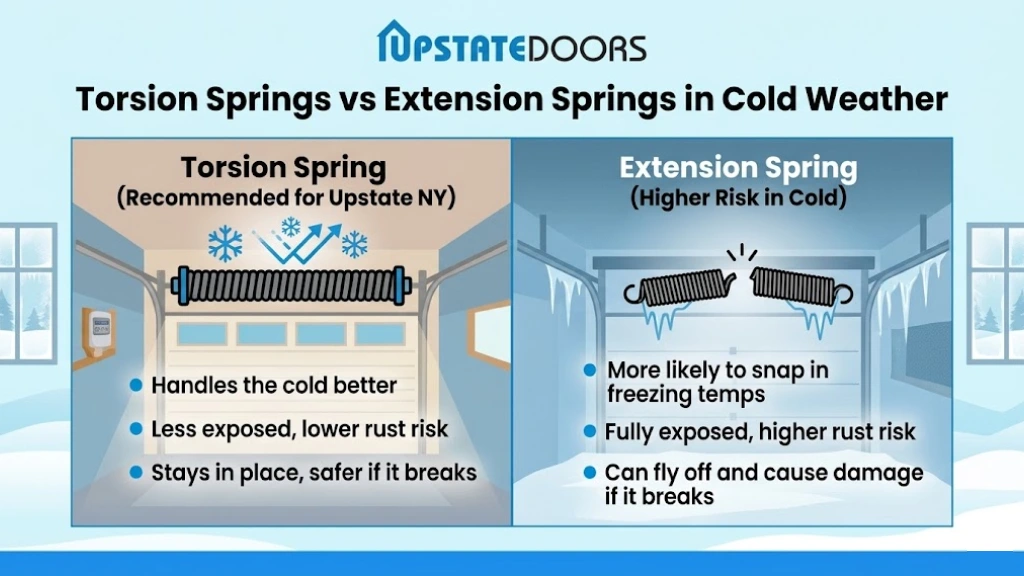
Here is a simple comparison of how both types hold up during Upstate NY winters:
| Winter Factor | Torsion Spring | Extension Spring |
| Cold Weather Performance | Handles the cold better | More likely to snap in freezing temps |
| Rust and Moisture | Less exposed, lower rust risk | Fully exposed, higher rust risk |
| If It Breaks | Stays in place, safer | Can fly off and cause damage |
| Winter Lifespan | Lasts longer in harsh conditions | Wears out faster in extreme weather |
The bottom line is simple. If you live in Upstate NY and want a spring that can handle tough winters without giving out on you, torsion springs are the way to go. To get a better idea of how long garage door springs last and when to expect a replacement, it is worth reading up before winter hits.
Signs Your Garage Door Spring Needs to Be Replaced
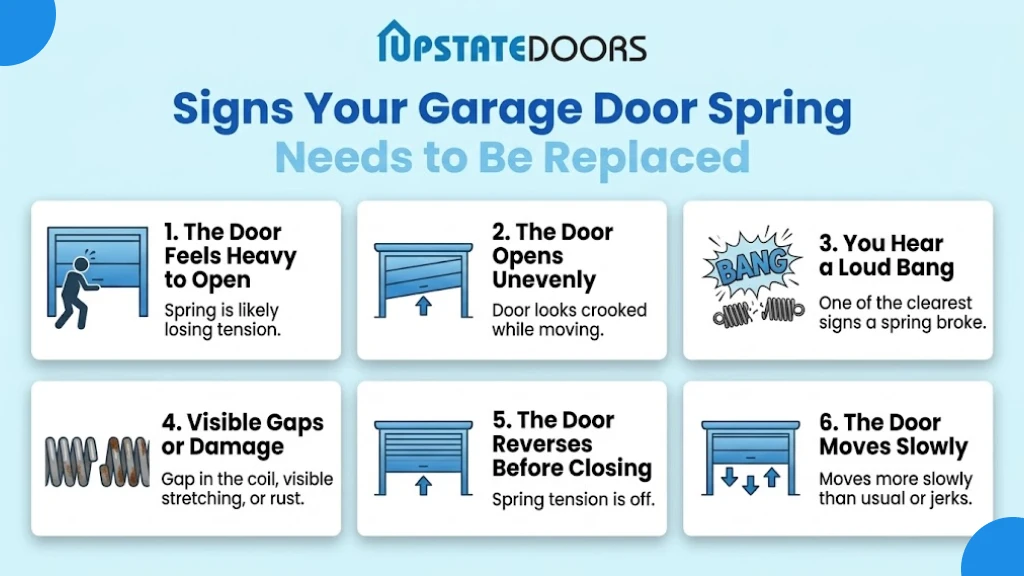
Whether you have a torsion spring or an extension spring, they will eventually wear out and show signs that it is time for a replacement.
The Most Common Signs to Watch For:
1. The Door Feels Heavy to Open
If your garage door suddenly feels much heavier than usual, the spring is likely losing tension. A healthy spring does most of the lifting, so when it starts to wear out, you will really feel the difference.
2. The Door Opens Unevenly
If one side of the door rises higher than the other or the door looks crooked while moving, one of your springs may be worn out or broken. This is more common with extension springs since each side has its own spring.
3. You Hear a Loud Bang
A loud popping or snapping sound coming from your garage is one of the clearest signs that a spring has broken. It can sound like a firecracker going off, and it usually happens when the door is in use.
4. Visible Gaps or Damage on the Spring
Take a close look at your springs. If you notice a gap in the coil, visible stretching, or rust and corrosion on the metal, those are signs that the spring is at the end of its life.
5. The Door Reverses Before Closing
If your garage door starts to close but then reverses back up on its own, it could be a sign that the spring tension is off and the opener is struggling to handle the weight.
6. The Door Moves Slowly
A door that moves more slowly than usual or jerks as it opens and closes is a sign that the springs are not providing the right amount of support anymore.
Why Spring Replacement Must Be Done by a Professional
Garage door springs carry a lot of tension. More than most people realize. That tension is what makes them powerful enough to lift your door, and also what makes them seriously dangerous to handle without the right experience and tools.
The Risks of DIY Spring Replacement
A lot of homeowners think replacing a spring is a simple fix they can handle on their own. But the reality is very different, and before you even think about doing it yourself, it is worth understanding the spring replacement cost and why professional help is always the smarter move.
Here is why it is not a job for DIY:
- A spring can snap without warning and cause serious injury
- Incorrect installation can lead to an unbalanced door that wears out faster
- The wrong spring size or tension can damage your garage door opener
- Without proper tools, you have very little control over a spring under full tension
- One small mistake can cause the door to come crashing down
What a Professional Does for You
- Uses the right tools to safely handle springs under tension
- Picks the correct spring size and tension for your specific door
- Checks the whole door system while they are at it
- Leaves you with a door that opens and closes safely
Ready to replace your springs? Get a free quote from our certified technicians today and have your garage door working perfectly again.
Final Thoughts
We hope this article helped you understand the difference between a torsion spring vs extension spring garage door setup and which one is the right fit for your home.
In simple terms, torsion springs are the better choice for heavier doors, harsh winters, and long-term value, while extension springs work just fine for smaller, lighter doors on a tighter budget.
When in doubt, always call a professional who can assess your door and recommend the best option for your specific situation.
FAQs
Can I replace a garage door spring myself?
You can, but it is not recommended. Garage door springs carry extreme tension that can cause serious injury if mishandled. Without the right tools and experience, one small mistake can lead to broken bones or worse. Hiring a professional is always the safer and smarter choice.
How do I know if my torsion spring or extension spring broke?
Your door will give you clear signs. A loud bang from the garage usually means a spring just snapped. After that, the door feels unusually heavy, moves unevenly, or refuses to open at all. Look closely at the springs.
A broken torsion spring will show a visible gap in the coil. A broken extension spring will look stretched or damaged along the side tracks.
How many cycles do garage door springs last?
One cycle equals one full open and close of your door. Extension springs typically last around 10,000 cycles. Torsion springs last longer, usually between 15,000 and 20,000 cycles. For an average household, that works out to roughly 5 to 10 years, depending on how often the door is used.
Is one type of spring safer than the other?
Yes. Torsion springs are safer. When they break, they stay on the shaft and cause no flying debris. Extension springs are riskier because a snapped spring can fly off with serious force.
Safety cables help reduce that risk, but not every installation includes them. If safety matters to you, torsion springs are the better option.
