
Is your garage door acting up, and you are not sure whether to fix it or replace it entirely?
You are not alone. Thousands of homeowners face this exact dilemma every year, standing in their driveway, wondering if a simple repair will solve the problem or if they are just throwing money at something that needs to go.
The answer depends on a few key factors. If your door has a broken spring, faulty opener, or damaged panel, repair is usually the smarter and cheaper move. But if your door is over 15 years old, constantly breaking down, or badly warped, replacement saves you more money.
When it comes to garage door repair vs replacement, making the right call matters more than most people realize. This guide breaks down the key signs, costs, and decision factors so you can make the smartest choice for your home and budget.
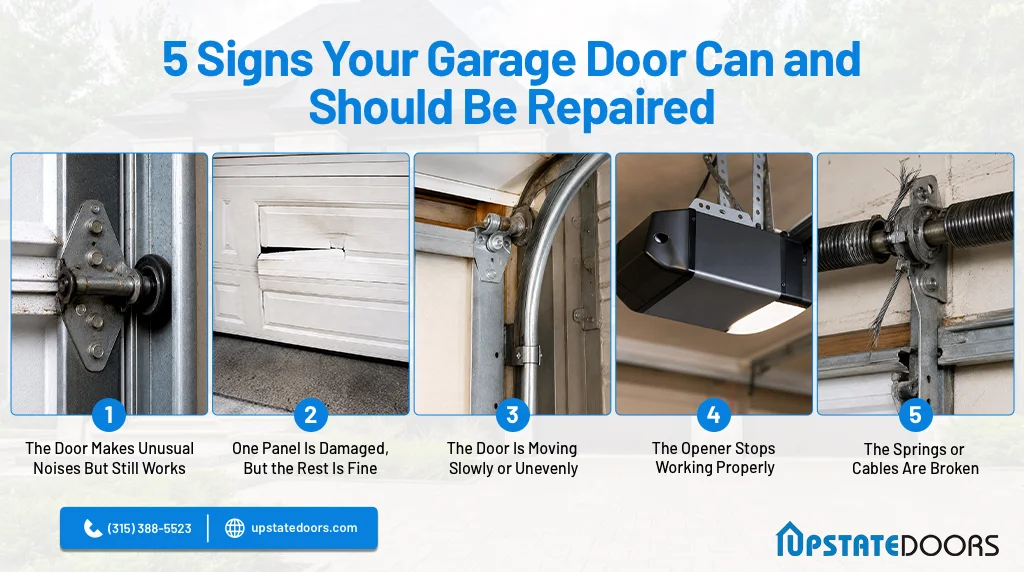
5 Signs Your Garage Door Can and Should Be Repaired
Before you spend thousands on a brand new door, it is worth asking a simpler question first. Can this door be saved? The good news is that most garage door problems are far less serious than they look.
Here are five clear signs when you need garage door repair:
1. The Door Makes Unusual Noises But Still Works
If your garage door is grinding, squeaking, or rattling but still opens and closes, the problem is likely a worn roller, loose hardware, or a lack of lubrication. These are small, affordable fixes that any technician can handle in under an hour.
2. One Panel Is Damaged, But the Rest Is Fine
A single dented or cracked panel does not mean the whole door is done. Most manufacturers sell individual panels as replacements, making this a straightforward repair that restores both function and appearance without a full replacement cost.
3. The Door Is Moving Slowly or Unevenly
A door that jerks, stutters, or moves more slowly than usual usually points to a spring tension issue or a track alignment problem. Both are common, repairable issues that a professional can correct quickly before they turn into bigger damage.
4. The Opener Stops Working Properly
If your door is not responding to the remote or wall switch, the opener motor, circuit board, or sensors are likely the culprit. Opener repairs and replacements cost far less than replacing the full door system and solve the problem just as effectively.
5. The Springs or Cables Are Broken
Broken springs and frayed cables are among the most common garage door problems homeowners face. Despite sounding serious, these are standard repairs that restore full function to an otherwise healthy door, making replacement unnecessary in most cases.
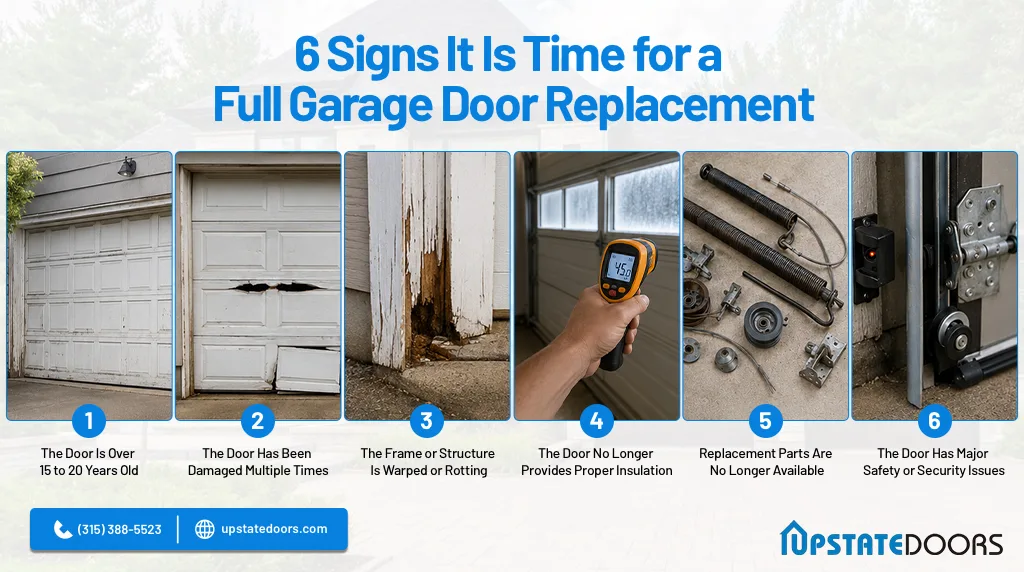
6 Signs It Is Time for a Full Garage Door Replacement
Sometimes a repair is simply not enough. While fixing small issues makes sense in many situations, there comes a point where patching up an old door costs more than it is worth.
Here are six signs that your garage door has reached the end of its road and a full replacement is the smarter investment.
1. The Door Is Over 15 to 20 Years Old
Age is one of the biggest factors in this decision. An older garage door becomes less energy efficient, harder to find parts for, and more prone to frequent breakdowns.
At a certain point, replacing it saves you far more money than continuing to repair an aging system that keeps failing.
2. The Door Has Been Damaged Multiple Times
If you have repaired the same door two, three, or four times in recent years, that pattern is telling you something important.
Recurring problems are a strong signal that the door’s overall structure is weakening and that future repairs are only going to become more frequent and more expensive.
3. The Frame or Structure Is Warped or Rotting
Cosmetic dents can be fixed, but a warped frame or rotting wood goes much deeper than surface damage. Structural issues affect how the door seals, operates, and protects your home. No amount of repair work can fully correct a door that has lost its structural integrity.
4. The Door No Longer Provides Proper Insulation
If you notice dramatic temperature changes in your garage or see your energy bills creeping up, your door may be the reason. A modern insulated replacement door can make a noticeable difference in both comfort and monthly costs.
5. Replacement Parts Are No Longer Available
Manufacturers stop producing parts for older door models over time. If your technician is struggling to find compatible springs, panels, or hardware, you are fighting a losing battle.
When parts become scarce, repairs get more expensive and less reliable, making replacement the only practical path forward.
6. The Door Has Major Safety or Security Issues
A garage door that does not close fully, reverses randomly, or fails to lock properly is a serious safety and security risk.
If your door cannot be trusted to protect your home and family consistently, no repair is worth the ongoing risk. A new door gives you reliable performance and modern safety features from day one.
Repair vs. Replacement Cost: A Real Side-by-Side Comparison
Most homeowners assume replacement always costs more, and while that is often true upfront, the full picture is a little more complicated.
Here is a side-by-side look at common garage door repair costs versus a full replacement so you can make a decision based on facts, not guesses.
Common Garage Door Repair Costs
| Repair Type | Average Cost |
| Spring Replacement | $150 to $350 |
| Cable Repair | $100 to $200 |
| Panel Replacement | $150 to $400 |
| Opener Repair | $100 to $300 |
| Roller and Track Repair | $100 to $250 |
| Full Tune-Up and Lubrication | $50 to $150 |
Full Garage Door Replacement Costs
| Door Type | Average Cost Installed |
| Basic Steel Door | $700 to $1,200 |
| Mid-Range Insulated Door | $1,200 to $2,000 |
| Premium Wood or Custom Door | $2,000 to $4,500 |
| New Opener Included | Add $200 to $600 |
The Real Cost Comparison
| Situation | Best Option | Estimated Cost |
| Single broken spring on a newer door | Repair | $150 to $350 |
| Two or more repairs in one year | Replacement | $700 to $2,000 |
| Damaged panel on a 5-year-old door | Repair | $150 to $400 |
| Warped door over 15 years old | Replacement | $1,000 to $2,500 |
| Opener failure on a newer door | Repair | $100 to $300 |
| Multiple issues with an aging door | Replacement | $700 to $2,000 |
The 15-Year Rule: When Age Becomes the Deciding Factor
When homeowners are torn between repairing and replacing, one factor cuts through the confusion faster than anything else.
Age. A garage door that has been running for 15 years or more operates in a different category than a newer one.
What Exactly Is the 15-Year Rule?
The 15-year rule is a simple guideline used by most garage door professionals. If your door is under 15 years old and the repair cost is reasonable, fix it.
If your door is 15 years or older and problems are piling up, replacement is almost always the smarter financial move.
The rule is not about being wasteful. It is about recognizing when a door has crossed from occasional maintenance into a cycle of repairs that never really ends.
Why 15 Years Is the Turning Point
- Parts Become Harder to Find: Manufacturers support their door models for around 10 to 15 years before phasing out parts. Once discontinued, sourcing springs, panels, and hardware becomes a challenge that drives up costs and wait times.
- Technology Has Moved Forward: Modern doors offer better insulation, quieter operation, stronger materials, and smart home compatibility that older models simply cannot match. Repairing an old door keeps you locked into outdated technology.
- Wear Spreads Across the Whole System: Springs, cables, rollers, and tracks all wear at similar rates. Fixing one component on an aging door often reveals everything around it is close to failing too, turning one repair into a chain of ongoing costs.
How to Apply the Rule
| Door Age | Repair History | Recommended Action |
| Under 10 years | Minor repairs | Repair with confidence |
| 10 to 15 years | Occasional repairs | Repair if the cost is under 40% of the replacement cost |
| 15 to 20 years | Multiple repairs | Lean toward replacement |
| Over 20 years | Any significant issue | Replace without hesitation |
What Upstate NY Winters Do to Garage Doors Over Time
Upstate New York winters are brutal, and your garage door feels every bit of it. Snow, ice, and freezing temperatures put constant stress on the entire door system year after year, and that damage adds up faster than most homeowners realize.
Cold temperatures cause metal springs and cables to become brittle and snap. Moisture from snow and ice seeps into panels and frames, causing rust, warping, and rot. The constant freeze-and-thaw cycle cracks weatherstripping, loosens hardware, and slowly pulls tracks out of alignment.
The truth is that harsh Upstate NY winters shorten a garage door’s lifespan. A door that lasts 15 to 20 years in a mild climate may start showing serious problems in 10 to 12 years here. If your door is struggling through another winter, the weather is very likely a big part of the reason why.
How Curb Appeal and Home Value Factor Into the Decision
Most people think about garage door repair and replacement in terms of function. But your garage door covers a large portion of your home’s front-facing exterior, which means its appearance affects how your home looks and what it is worth.
First Impressions Matter More Than You Think
Your garage door is one of the first things people notice about your home. A dented, faded, or outdated door brings down the overall look of your property, no matter how well-maintained everything else is. A fresh, modern replacement instantly lifts your home’s curb appeal and gives the entire exterior a cleaner and more polished appearance.
The Return on Investment Is Hard to Ignore
Replacing a garage door is ranked among the highest-return-on-investment home improvements. On average, homeowners recover around 90 to 100 percent of the replacement cost in added home value. That means a new door does not just look better. It pays you back when it comes time to sell.
When Curb Appeal Should Push You Toward Replacement
If your door still functions but looks old, heavily dented, or out of place with the rest of your home’s exterior, replacement is worth serious consideration, even if repairs are possible. The visual and financial returns on a new door often make it the smarter choice for your home’s long-term value.
How to Get an Honest Assessment Without Being Upsold
One of the biggest concerns homeowners have when calling a garage door company is wondering whether they are getting genuine advice or just a sales pitch. It is a fair concern.
Here is how to protect yourself and get an assessment you can trust.
- Get More Than One Opinion: Never rely on a single technician’s recommendation for a major decision. Get at least two or three quotes. If multiple technicians suggest the same solution independently, you can trust that the advice is genuine.
- Ask Specific Questions: Do not just ask what is wrong. Ask why repair is not enough if replacement is being recommended. A trustworthy technician will answer clearly without pressuring you toward the more expensive option.
- Know Your Door’s Age Before They Arrive: Walk in informed. Knowing your door’s age and basic repair history gives you a stronger foundation for the conversation and makes it harder for anyone to oversell you.
- Watch for Red Flags: Be cautious if a technician jumps straight to replacement without a thorough inspection or cannot clearly explain what is wrong.
- Choose a Company With Strong Local Reviews: Local businesses that rely on word of mouth to give you an honest assessment, rather than a company focused on closing the biggest sale possible.
Final Thoughts
When it comes to garage door repair vs replacement, there is no single answer that works for every homeowner. The right decision depends on your door’s age, the extent of the damage, and your budget.
If you are still unsure, the team at Upstate Doors is ready to help. They bring honest, experienced advice to every assessment with no pressure and no upselling. Just straightforward answers from a local team that Upstate NY homeowners have trusted for years.
Reach out today and get the clarity you need to make the right call for your home.
Frequently Asked Questions
1. When should you replace a garage door?
You should replace your garage door when it is over 15 years old and experiencing frequent problems, has structural damage like warping or rotting, or when repair costs are approaching 50% or more of the cost of a new door.
If your door is also hurting your home’s curb appeal or no longer closing securely, replacement is the right move.
2. Should I repair or replace my garage door?
It depends on the age of your door and the nature of the problem. If your door is relatively new and the issue is isolated to one component like a spring, cable, or opener, repair is almost always the smarter and more affordable choice.
If your door is older, has been repaired multiple times, or has structural issues, replacement will save you more money and frustration in the long run.
3. Is it worth repairing an old garage door?
It can be, but only up to a point. If the repair cost is reasonable and the door is otherwise in good shape, fixing it makes sense.
However, if your door is over 15 years old and parts are becoming hard to find, repeated repairs will likely cost you more than a replacement would over the next few years.
4. What is the most common garage door repair?
Spring replacement is by far the most common garage door repair. Springs bear the full weight of the door every time it opens and closes, which means they wear out faster than any other component.
The good news is that spring replacement is straightforward, affordable, and restores full function to an otherwise healthy door.
